How Much Does Roof Cleaning Cost in Thurston County WA?
Roosevelt Roofing LLC provides professional roof cleaning Thurston County WA homeowners need for moss removal roof Olympia WA properties, soft wash roof cleaning Lacey WA calls, and roof moss treatment South Puget Sound-wide. We're a licensed roofing contractor (License #ROOSERL790MW) based in Eatonville — serving Thurston County alongside our Pierce and King County work, with free estimates and same-week scheduling.
By Eric Haugh, Owner · Last updated July 2026
How Much Does Roof Cleaning Cost in Thurston County?
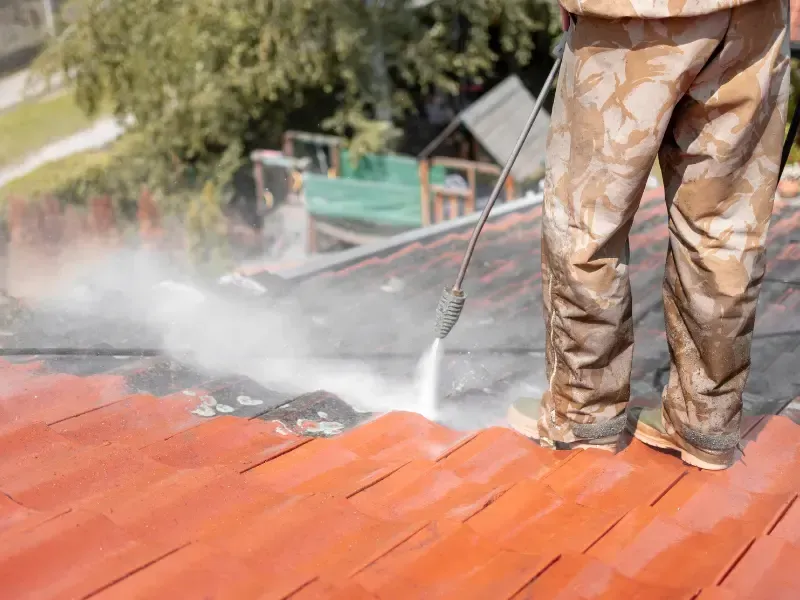
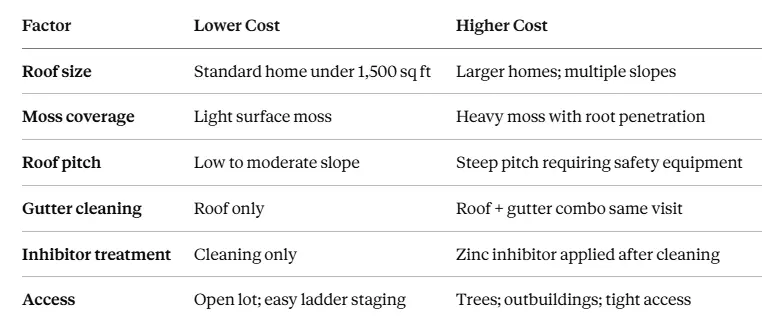
Roof cleaning cost in Thurston County varies by roof size, pitch, moss severity, and whether gutter clearing is combined in the same visit. Olympia's labor rates are slightly below Seattle but above rural Thurston County areas, reflecting the regional plumbing and trades market. We don't publish specific ranges without a verified local source tied to the current year — call (253) 318-3543 for a free written estimate scoped to your specific roof.
Here's what drives cost on a Thurston County roof cleaning:
Can Moss Damage a Roof?
Yes — and in Thurston County's climate, moss is one of the most common causes of preventable roof damage. Here's the mechanism, because understanding it is what makes the case for regular cleaning obvious:
Moss grows under shingle edges, not just on top of them. The root structure (rhizoids) of moss penetrates under the overlapping shingle edges and lifts them progressively as the root mass expands. A shingle edge that's been lifted by moss is a shingle that allows wind-driven rain to enter underneath — the water pathway that leads to underlayment damage, decking saturation, and interior leaks.
Moss retains moisture against the shingle surface. Thurston County roofs stay wet for long periods during the October–March storm season. A moss-covered surface stays wetter longer than a clean surface — the moss mat acts as a sponge that holds water against the asphalt base, accelerating granule release and softening the mat itself.
Granule loss accelerates under moss. Granules protect the asphalt base from UV degradation. Moss retains moisture that softens the bond between granules and the asphalt, and when moss is present, granules release faster than on clean shingles. Once granules are gone, the asphalt mat degrades quickly.
The RCAW cites untreated moss growth as one of the leading causes of premature shingle replacement in Western Washington — and Thurston County's climate, with its combination of shade, rainfall, and mild temperatures that favor moss year-round, is among the most demanding environments in the state.
Which Roof Cleaning Method Is Best for PNW Moss?
This is the question with the most practical consequence for Thurston County homeowners, because the wrong method damages the roof it's supposed to protect.
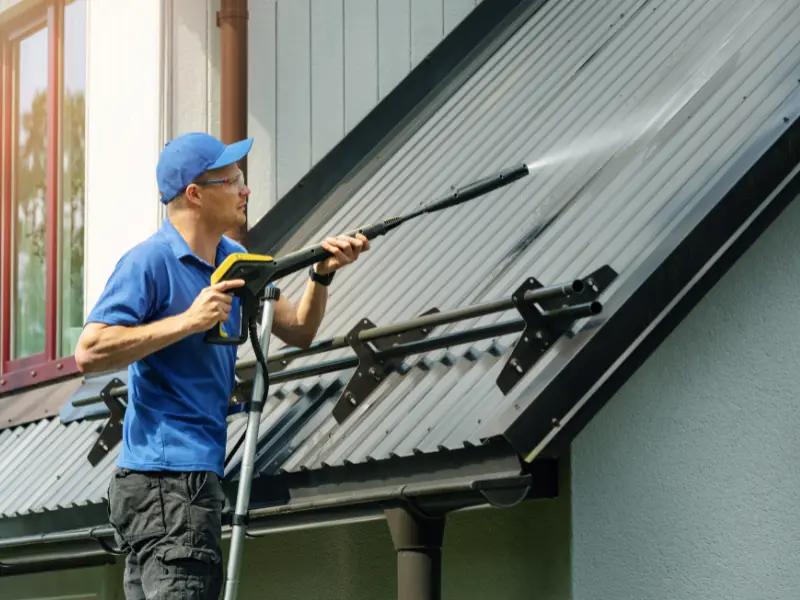
Soft wash is the correct method for asphalt shingles. Soft wash uses low-pressure water application (under 100 PSI) combined with a biodegradable cleaning solution that kills moss, algae, and lichen at the cellular level. The organisms die and release from the shingle surface gradually with subsequent rainfall — no abrasive mechanical removal, no granule loss.
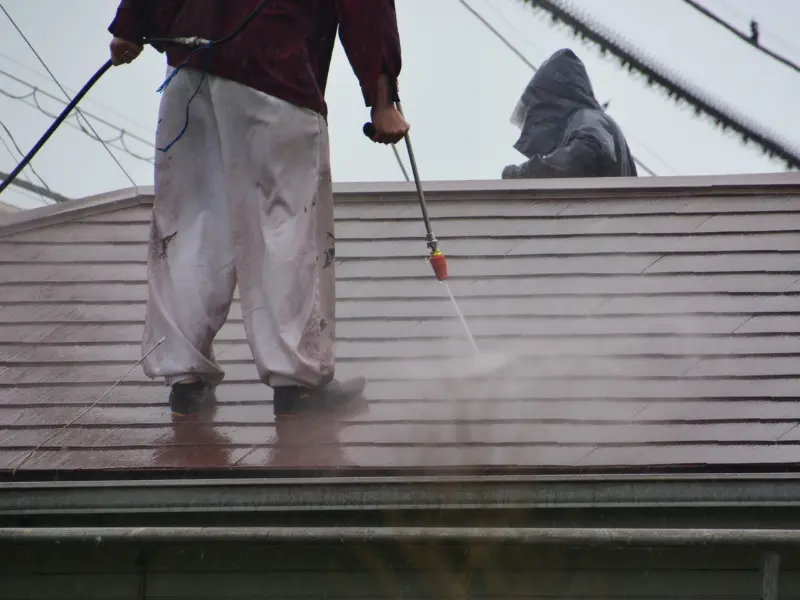
Pressure washing is not appropriate for asphalt shingles. High-pressure water (2,000–4,000 PSI) blasts granules off the shingle surface, voids most manufacturer warranties, and removes only the surface growth while leaving the root system intact — which means faster regrowth than soft wash treatment. The RCAW recommends against pressure washing on asphalt shingles for exactly these reasons.
Chemical treatment alone (without soft wash) — applying moss-killing solution and leaving the dead moss to wash off with rain — is effective for light moss coverage and is a reasonable DIY approach for early-stage moss. For heavy or established moss, a soft wash rinse after treatment produces a cleaner result and removes the dead organic material before it decomposes on the shingle surface.
Here's the direct comparison in plain terms: soft wash applies a biodegradable cleaning solution at under 100 PSI — no granule impact, kills moss at the cellular level, appropriate for all asphalt shingle roofs. Pressure washing applies 2,000 to 4,000 PSI — strips granules, voids most manufacturer warranties, removes surface moss but leaves the root system intact for faster regrowth. Chemical treatment alone with no rinse is effective for light coverage and is a reasonable DIY approach; for heavy established moss, a soft wash rinse after treatment produces a cleaner result.
Roosevelt Roofing uses soft wash exclusively on asphalt shingles across Thurston County — no pressure washing.
How Often Should You Clean a Moss Covered Roof in Thurston County?
The frequency that makes sense depends on where in Thurston County you are and what your roof's exposure looks like. Washington State L&I requires a licensed contractor for all roofing work — verify any contractor you hire before scheduling.
Annual cleaning is the right cadence for Thurston County roofs with:
Heavy tree canopy — Douglas fir, big-leaf maple, and western red cedar in Capitol neighborhood, South Capitol, and the wooded lots throughout west Olympia create continuous moss pressure year-round
North-facing slopes — north exposures stay shaded and damp; moss establishes and grows significantly faster than on south or west slopes
Properties in Yelm, Rainier, or rural Thurston County where canopy is heavy and moss history is consistent
Every two to three years is sufficient for:
Roofs with good south and west exposure and minimal overhead canopy
Roofs where a zinc inhibitor was applied after the last cleaning — zinc ions released with each rainfall inhibit moss re-establishment downslope
Newer roofs with less surface texture for moss to grip
For moss-covered roofs specifically — if the roof already has visible moss coverage, clean it now regardless of when it was last serviced. The RCAW notes that the longer established moss is left in place, the more root penetration develops under shingle edges. A roof that looks like it needs cleaning in Thurston County's climate almost certainly does.
How Does Moss Damage Roof Shingles in the Pacific Northwest?
This is the process in specific terms, because Thurston County homeowners who understand the mechanism are more likely to maintain a cleaning schedule:
Stage 1 — Spore landing and germination. Moss spores are airborne and land on shingles continuously. They establish most readily in the fissures between shingles and on the upper surface of shingle laps — areas that stay moist longest.
Stage 2 — Surface coverage. Moss spreads across the shingle surface, forming a mat. At this stage the damage is primarily moisture retention — the mat keeps the shingle surface wet and accelerates granule bond degradation.
Stage 3 — Root penetration. As the moss mat thickens, rhizoids (root-like structures) grow under the shingle edges. This is where structural damage begins — the rhizoids lift shingle edges progressively, creating pathways for water entry.
Stage 4 — Edge lifting. Lifted shingle edges allow wind-driven rain to enter under the shingle on the upslope side. Water that enters this way migrates under multiple shingles before reaching the underlayment, making it difficult to trace the entry point from inside the attic.
Stage 5 — Underlayment and decking damage. Persistent moisture under lifted shingles saturates the underlayment and eventually the decking sheathing. Soft decking is the most expensive consequence of long-term moss damage — a soft spot discovered during a re-roofing project means sheathing replacement on top of the shingle cost.
Does Roof Cleaning Extend the Life of a Roof?
Yes — significantly in Western Washington. Thurston County roofs under active moss pressure that aren't cleaned age faster than comparable roofs that are maintained on a cleaning schedule. The mechanism is straightforward: moss accelerates granule loss, granule loss accelerates UV degradation of the asphalt base, and UV degradation shortens shingle lifespan from the expected 20 to 25 years toward the lower end or below it.
The economics are clear: roof cleaning at Olympia's cost range is a fraction of the cost of a roof replacement. Our roof replacement Thurston County guide has sourced 2026 replacement cost data — even a conservative reading shows roof cleaning paying for itself many times over in extended shingle life.
Can Roof Moss Be Prevented in the Pacific Northwest?
Yes — with zinc inhibitor treatment applied after cleaning, and with canopy management where practical.
Zinc inhibitor treatment. A zinc-based solution applied along ridge lines and upper roof sections releases zinc ions with each rainfall downslope across the roof surface. Zinc creates an environment that inhibits moss spore establishment — not a perfect barrier, but it meaningfully extends the interval between professional cleanings. Applied after every cleaning, a zinc inhibitor typically extends the cleaning interval from one year to two to three years on roofs with moderate canopy.
Zinc and copper ridge strips. Permanent metal strips installed at the ridge release metal ions passively with each rainfall — the same mechanism as liquid inhibitor, but without reapplication. These are a low-cost addition at the time of a new roof installation or replacement and are worth including on any Thurston County home where moss is a consistent issue.
Canopy management. Trimming overhanging branches reduces debris accumulation and increases the amount of direct sunlight that reaches the roof surface. North-side canopy reduction is the highest-leverage intervention for Capitol neighborhood and wooded Olympia properties.
Avoiding moisture-retaining debris. Leaves and needle accumulation in roof valleys and at the base of chimneys or dormers creates the moist, shaded microenvironments where moss establishes first. Keeping those areas clear after fall and spring debris events reduces the number of moss-favorable locations on the roof.
Thurston County's stormwater management guidelines recommend biodegradable, phosphate-free products for all roof and exterior cleaning — Roosevelt Roofing uses products meeting these specifications on every Thurston County job.
Roof Cleaning Across Thurston County
Roosevelt Roofing handles roof cleaning throughout Thurston County from our Eatonville base:
Olympia — Capitol neighborhood has some of the heaviest moss pressure in the county; established Douglas fir canopy and north-facing slopes on older construction create year-round moss conditions; annual cleaning is the standard here
Lacey — 1980s–1990s housing stock with consistent moss pressure; combination roof and gutter cleaning is common
Tumwater — similar housing vintage to Lacey; moss removal is a consistent service throughout the neighborhood fabric
Yelm, Rainier, and rural Thurston County — heaviest canopy and highest moss pressure of any Thurston County market; rural properties benefit from annual cleaning and zinc inhibitor treatment
For the best roof cleaning services near Olympia WA and the top rated moss removal companies in Thurston County, Roosevelt Roofing is available Mon–Sun, 6:00 am to 9:00 pm for estimates and scheduling.
Frequently Asked Questions
1. How does moss damage roof shingles in the Pacific Northwest?
Moss grows under shingle edges via root-like rhizoids that lift the shingle progressively, creating water entry pathways. It also retains moisture against the shingle surface, accelerating granule loss and asphalt degradation. Thurston County's combination of rainfall, shade, and mild temperatures creates year-round moss pressure that makes the damage timeline shorter than in drier markets.
2. What is the difference between soft wash and pressure wash roof cleaning?
Soft wash uses under 100 PSI with a biodegradable cleaning solution that kills moss at the cellular level — no granule loss, appropriate for asphalt shingles. Pressure wash uses 2,000–4,000 PSI that strips granules, voids manufacturer warranties, and removes only surface growth while leaving the root system for faster regrowth. Roosevelt Roofing uses soft wash exclusively on asphalt shingles.
3. How often should PNW roofs be cleaned?
Annually for roofs under heavy tree canopy or on north-facing slopes in Thurston County — Capitol neighborhood Olympia properties and wooded Yelm/Rainier homes typically need annual service. Every two to three years is sufficient for well-exposed roofs with zinc inhibitor treatment applied after cleaning. A roof with visible moss coverage needs cleaning now regardless of schedule.
4. Does roof cleaning extend the life of a roof?
Yes. Moss accelerates granule loss and UV degradation that shortens shingle lifespan. Professional roof cleaning in Thurston County is a fraction of the cost of shingle replacement. Maintained cleaning schedules consistently extend roof service life toward the full expected 20 to 25 years.
5. Can roof moss be prevented in the Pacific Northwest?
Yes — with zinc inhibitor treatment applied after each cleaning (extends the interval to two to three years), permanent zinc or copper ridge strips on new roofs, and canopy management to increase sunlight on north-facing slopes. Biodegradable, phosphate-free products are recommended per Thurston County stormwater guidelines. Prevention is significantly more economical than remediation after heavy moss establishment.
Schedule Roof Cleaning in Thurston County
Roosevelt Roofing LLC serves Thurston County for soft wash roof cleaning, moss removal, and zinc inhibitor treatment. Free estimates and same-week scheduling.
Request a Free Estimate or call (253) 318-3543) today. Available Mon–Sun, 6:00 am to 9:00 pm.
Related reading:
Contact Roosevelt Roofing LLC
Roosevelt Roofing LLC 41733 Mountain Highway E Eatonville, WA 98328 Phone: (253) 318-3543 Hours: Mon – Sun, 6:00 am – 9:00 pm
Serving Olympia, Lacey, Tumwater, Yelm, Rainier, Tenino, Rochester, and all of Thurston County, WA.
