How Often Should You Clean a Moss Covered Roof in Pierce County?
Most Pierce County roofs need moss addressed every two to four years, and the method matters more than the frequency — pressure washing an asphalt roof strips the granules that protect it. Roosevelt Roofing LLC handles roof cleaning in Pierce County, WA, and here the runoff has to be managed as carefully as the moss.
By Eric Haugh, Owner · Last updated August 6, 2026
Can Moss Damage a Roof?
Yes, and the mechanism is mechanical rather than chemical. Moss holds water against the roof surface indefinitely, and as it thickens it grows under the leading edge of each shingle course and lifts it. A lifted shingle edge is an opening for wind-driven rain, and once water gets under the course it is behind the water-shedding plane. On cedar it accelerates rot directly. In freeze conditions, saturated moss expands and works at the edges further.
That is the part most articles cover. Here is the part they do not.
Moss is also a symptom. Moss colonises rough, moisture-retaining surfaces. A new asphalt shingle is relatively smooth and its granules sit tight; a twenty-year-old shingle has lost granules, exposed more asphalt, and become porous and rough. So heavy moss on an older roof is often telling you the shingle surface has already deteriorated — the moss found a hospitable surface because the roof was aging, not the other way round.
Why that matters practically: aggressive cleaning of a roof in that condition can finish it. If a roof is at or near the end of its service life, the honest recommendation is sometimes to leave the moss alone and budget for replacement rather than pay for a cleaning that removes what little granule coverage remains. We will tell you when that is the case, which is not always what a homeowner wants to hear.
So can moss damage a roof — yes. But whether cleaning is the right response depends on how much roof is left to protect. Our guide to spotting roof damage covers how to read that, and the asphalt shingle guide explains why the granule layer is the part that matters.
Soft Wash vs Pressure Wash
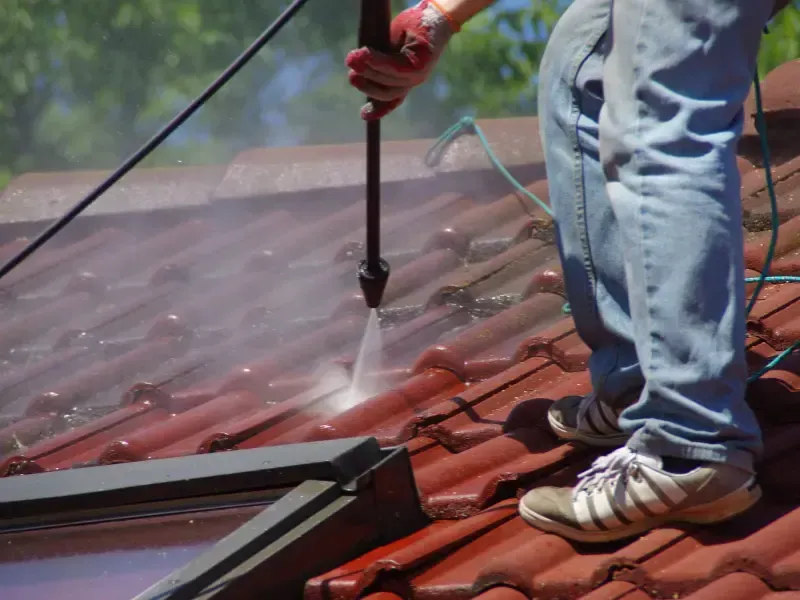
If you take one thing from this page, take this: never pressure wash an asphalt shingle roof.
Asphalt shingles are protected by a layer of mineral granules embedded in the surface. Those granules are the UV shield — they are what stops sunlight degrading the asphalt underneath. A pressure washer removes them. You can watch them come off in the runoff. The roof looks dramatically cleaner and has just lost years of its life, and most manufacturers treat high-pressure cleaning as grounds to void a shingle warranty.
Soft washing applies a cleaning solution at low pressure, lets it work, and rinses gently. It is slower, it looks less impressive while it is happening, and it is the correct method.

There is a narrow exception: some hard surfaces and some metal roofing tolerate higher pressure, and metal roofing behaves differently from asphalt in general because moss has far less to grip. On any composition shingle roof, the answer is soft wash.
So on which roof cleaning method is best for PNW moss: soft wash, followed by leaving the dead moss to weather off rather than scraping it aggressively. Anyone quoting soft wash roof cleaning Puyallup WA or elsewhere in the county should be able to tell you the pressure they work at and what solution they use.

The Salmon Problem: Why Washington Treats Roof Cleaning Differently
This is the section that is specific to here, and it changes what a responsible contractor will recommend.
Most national roof-moss advice points to zinc — zinc strips at the ridge, or zinc-impregnated shingles — as the standard preventive. In Washington, that advice needs a serious caveat, because zinc is a problem for fish. The Department of Ecology, in its guidance on reducing zinc in stormwater, states plainly that zinc can bind to fish gills and cause suffocation, and it identifies roof runoff as a zinc source worth controlling at the source rather than treating downstream.
Copper is worse. Regional environmental guidance in the Puget Sound area commonly puts copper at roughly ten to twenty-five times more toxic to aquatic life than zinc, which is why copper strips and copper-impregnated shingles are generally advised against here even though they are effective at suppressing moss.
I will be straight about this: recommending zinc or copper ridge strips as a default in a salmon watershed deserves more qualification than it usually gets. If a metal strip is used at all, roof runoff should not discharge directly to a storm drain, stream, or wetland — and if you collect roof water in a barrel, it should not go on a vegetable garden.
The cleaning itself carries the same obligation. Ecology's stormwater and residential pollution guidance is built on a simple principle: nothing but rain should go down a storm drain. Rinse water carrying moss-killing product is not rain. So the working practice on a treated roof is to disconnect or divert downspouts before treatment, direct runoff onto lawn or gravel where soil can filter it rather than onto pavement that drains to the street, and avoid zinc sulphate and copper sulphate products in favour of soap-based or acid-based alternatives.
None of that is expensive. It is a tarp, a downspout elbow, and product selection. But it is the difference between a contractor who has thought about where the water goes and one who has not, and in Pierce County — with the Puyallup River system and Puget Sound downhill of essentially everything — it is a fair question to ask before you hire.
How Often Should PNW Roofs Be Cleaned?
The honest answer to how often should you clean a moss covered roof is every two to four years for most Pierce County homes, but the range is wide because the drivers are local rather than universal.
Canopy is the biggest factor. A roof under mature Douglas fir with branches overhanging it will need attention every two years or sooner. The same roof on an open lot may go five or six.
Orientation is the second. North and north-east slopes get the least sun, dry the slowest, and grow moss first. It is common for one slope to need treatment while the others do not, and treating only what needs it is cheaper and gentler on the roof.
Roof age is the third, for the reason above — an older, rougher surface colonises faster.
Debris load compounds all of it. Needles and leaves sitting in valleys and against the roof hold moisture and give moss a foothold. This is where roof and gutter work overlap, and why we usually do them together: clogged gutters back water up under the drip edge, and our gutter cleaning guide covers that mechanism.
The practical approach is inspection-driven rather than calendar-driven. Look at the north slopes each autumn. Green fuzz between the shingle courses is the point to spot-treat; thick cushions of moss lifting the edges is the point where you have waited too long.
Does Roof Cleaning Extend the Life of a Roof?
Done properly, yes. Done with a pressure washer, no — it shortens it.
That is not a hedge, it is the whole answer. Removing moss that is lifting shingle edges and trapping moisture removes an active cause of deterioration, and on a roof with remaining service life that is straightforwardly worth doing. Repeated moss removal over the life of a roof in this climate is a genuine contributor to reaching the material's expected lifespan rather than falling well short of it.
The exception is the one above: on a roof already past its useful life, cleaning is cosmetic at best and destructive at worst. And any cleaning done at high pressure trades appearance today for granule loss you cannot get back.
Where moss has already caused damage — lifted courses, exposed underlayment, deteriorated cedar — cleaning does not repair it. That is roof repair work, and if enough of the roof is affected, roof replacement.
Can Roof Moss Be Prevented?
Not eliminated in this climate, but substantially reduced, and the most effective measures are not products.
Trim overhanging limbs. This is the highest-leverage action available and it does two things at once: more sun reaches the roof so it dries faster, and less needle and leaf debris lands on it. Nothing in a bottle competes with sunlight.
Keep the roof and gutters clear. Debris is what holds the moisture that moss needs. Blowing needles off a roof in early autumn is a twenty-minute job that removes the substrate.
Catch it early with spot treatment. Green discolouration between courses treated with a moss-killing soap is far cheaper and gentler than a full clean of established moss two years later.
Be careful with metal strips, for the reasons above. If used, control where the runoff goes.
Improve attic ventilation where a warm roof deck is keeping the surface damp. This is uncommon but real.
A roof moss treatment Lakewood WA homeowners often expect to be a one-time fix is better understood as maintenance on a cycle, like gutter clearing. The goal is to keep moss in the discolouration stage rather than the cushion stage.
Cost and Pierce County Areas We Serve
On budget, how much does roof cleaning cost tracks roof area, pitch, access, how many slopes actually need treating, and how established the moss is. Steep roofs need more staging and more time. A single north slope with early growth is a fraction of a whole-roof clean of thick moss. Bundling with gutter clearing on the same visit is meaningfully cheaper than two trips. We quote from the roof, and estimates are free.
Across the county, canopy and aspect drive the work more than city lines do.
Gig Harbor, Browns Point, and Dash Point — heavy conifer cover and waterfront-adjacent lots with slopes that see little direct sun. The most frequent cleaning intervals we see.
Tacoma's older neighbourhoods — mature street trees, closely spaced houses shading each other, and more complex rooflines with valleys that collect needles. Most moss removal roof Tacoma WA work is valley and north-slope driven.
Parkland, Spanaway, and Frederickson — large lots with stands of fir, so debris load rather than shade is often the driver.
Puyallup, Sumner, and Bonney Lake — mixed exposure, and the area where roof age most often decides whether cleaning is worth doing.
We serve Pierce County, Thurston County, and King County, with the service detailed on our roof and gutter cleaning page, the full area list on our locations page, and completed work in our gallery.
If you have been searching roof cleaning Pierce County WA, comparing the best roof cleaning services near Tacoma WA, or shortlisting the top rated moss removal companies in Pierce County, three questions sort the field: what pressure do you work at, what happens to the rinse water, and will you tell me if my roof is too far gone to be worth cleaning?

Frequently Asked Questions
1. How does moss damage roof shingles in the Pacific Northwest?
Mechanically. Moss holds water against the roof surface continuously, and as it thickens it grows beneath the leading edge of each shingle course and lifts it. A lifted edge admits wind-driven rain behind the water-shedding plane. On cedar, constant moisture accelerates rot directly. Freeze cycles in saturated moss work the edges further. Moss is also partly a symptom: it colonises rough, porous surfaces, so heavy growth often indicates a shingle surface that has already lost granules and begun to deteriorate.
2. What is the difference between soft wash and pressure wash roof cleaning?
Soft washing applies a cleaning solution at low pressure — comparable to a garden hose — lets it work, and rinses gently. Pressure washing uses high pressure, typically 1,500 psi and above. On asphalt shingles that high pressure strips the mineral granules that protect the asphalt from UV, permanently shortening the roof's life, and most manufacturers treat it as grounds to void the warranty. Soft washing is slower and less dramatic on the day, and it is the correct method for any composition shingle roof.
3. How often should PNW roofs be cleaned?
Every two to four years for most Pierce County homes, driven by three local factors. Canopy matters most: a roof under overhanging fir may need attention every two years, while an open lot can go five or six. Orientation is second, since north and north-east slopes dry slowest and grow moss first — often only one slope needs treating. Roof age is third, because older, rougher shingle surfaces colonise faster. Inspect north slopes each autumn rather than working to a fixed calendar.
4. Does roof cleaning extend the life of a roof?
Done correctly, yes — removing moss that lifts shingle edges and traps moisture removes an active cause of deterioration, and regular moss control genuinely helps a roof reach its expected lifespan in this climate. Done with a pressure washer, no: granule loss shortens the roof's life regardless of how clean it looks. And on a roof already at the end of its service life, cleaning is cosmetic at best, since there is little granule coverage left to protect.
5. Can roof moss be prevented in the Pacific Northwest?
Reduced substantially, not eliminated. The most effective measure is trimming overhanging limbs, which both increases sun exposure so the roof dries faster and reduces the needle and leaf debris that holds moisture. Keeping the roof and gutters clear removes the substrate moss needs. Spot-treating early green discoloration is far cheaper than cleaning established moss. Zinc and copper strips do suppress moss but warrant caution in Washington, since zinc can bind to fish gills and copper is considerably more toxic to aquatic life — if used, roof runoff should not discharge to storm drains or streams.
Contact Roosevelt Roofing LLC
Roosevelt Roofing LLC Serving Tacoma, Pierce County, and the South Puget Sound Phone: (253) 318-3543 Hours: Monday–Sunday, 6:00 AM – 9:00 PM Family-owned and veteran-owned, serving Pierce County including Tacoma, Puyallup, Lakewood, Gig Harbor, Browns Point, Parkland, Sumner, and Bonney Lake, plus Thurston and King County.
Moss on the north slope? Request a free estimate or call (253) 318-3543, and we will soft wash it, control where the runoff goes, and tell you honestly whether your roof is worth cleaning or worth replacing.
