How Does Emergency Roof Repair Work In Puyallup?
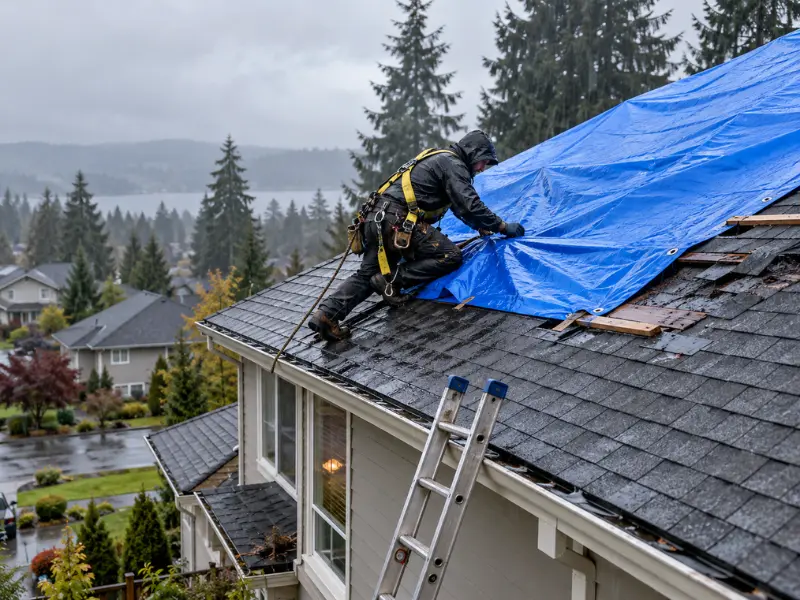
Emergency roof repair in Puyallup consists of three primary steps. The first is to stop the water, the second is to find the source of the leak, and the third step is to permanently repair the roofing material. The process of emergency roof repair in Puyallup starts by covering the affected area with tarps or other materials to stop the water, from entering the building. The second step requires to find the source of the leak, and the final step is permanently mending the roof, which can only be done when the weather clears up.
By Eric Haugh, owner of Roosevelt Roofing LLC. Updated October 19, 2026
How does roof leak repair start with finding the source?
The initial step in good roof leak repair is tracking down where the water is getting into the roof, which typically isn't coming straight down from the stain. Water runs along the roof deck and then down rafters and sheathing until it falls, meaning a stain over your couch could be coming from several feet up and over on the roof.
That's why people tell us how do you find where a roof leak is coming from, and typically we start by looking in the attic and cross-referencing that with what we can see from the roof above. These are the spots we tend to see fail most often in Puyallup storms:
Entry point | Why it fails in heavy rain and wind | Typical fix |
Pipe boots | Rubber collars crack with age and sun | Replace the boot |
Chimney and wall flashing | Sealant dries out, then wind drives rain behind it | Reseal or replace flashing |
Valleys | Two slopes dump water into one channel | Clear debris, repair underlayment |
Missing shingles | Gusts lift tabs and tear them off | Replace shingles and seal |
Nail pops | Old nails back out and leave holes | Reset or replace, then seal |
Skylights | Seals and flashing wear out | Reseal or reflash |
In addition, moss and fir needles make things worse here. They hold water against shingles and clog valleys, so water backs up under the roofing.
How does emergency roof tarping protect your home?
Emergency roof tarping involves covering the hole with a heavy tarp that extends beyond the damage and is secured tightly so that water runs off it rather than into the house. If done correctly, it will provide you with time. Done wrong, it can rip loose in the next gust or create new leaks. We've pulled off plenty of hardware-store tarps that were nailed straight through the middle, which just added more holes.
Here's what proper tarping includes:
A tarp sized well beyond the damage, not just over the hole
Wrapping over the ridge when possible, so water can't run underneath
Boards along the edges to hold the tarp down evenly
As few new fasteners as possible, placed where they won't create fresh leaks
Meanwhile, the inside of your home also requires some attention. Homeowners frequently wonder about how you can prevent water from getting into your ceiling while you wait. Place a bucket beneath the drip and remove the valuable items from the area. If the ceiling is sagging under the weight of the water, turn off the power to it and keep individuals away from the area. Then call a roofer.
What does storm damage roof repair look like in Puyallup?
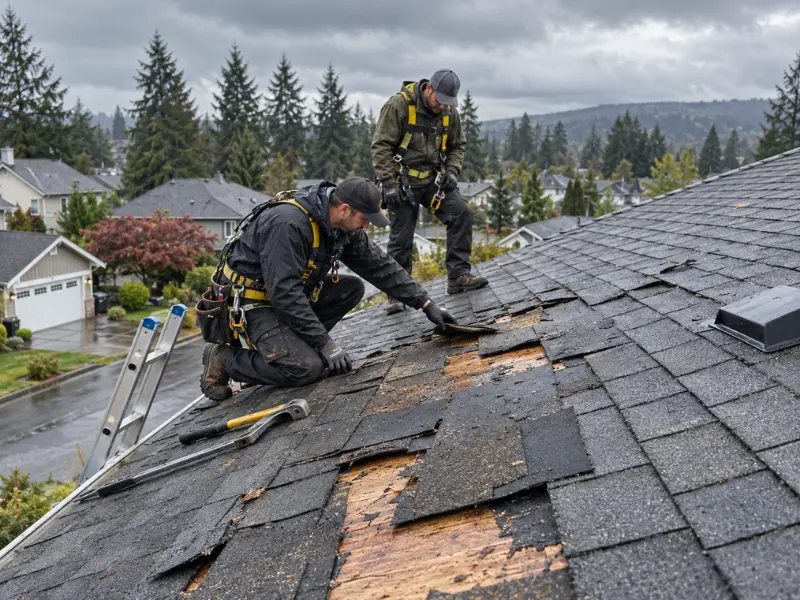
Storm damage roof repair replaces whatever the wind, rain or a fallen limb broke, then checks the rest of the roof for hidden damage. In our area, the usual culprits are strong fall and winter windstorms and tall firs dropping branches onto roofs.
Timing matters too. Puyallup's wettest stretch runs from late fall through winter, when long bands of steady rain can sit over the valley for days. A small gap that stays dry in summer can soak a ceiling in one of those storms. That's why we always check the whole roof, not just the spot that failed.
Most storm calls we see fall into a few patterns:
Wind damage: lifted or missing shingles and torn-off ridge caps
Tree damage: punctures, cracked decking and broken rafters
Water damage: soaked underlayment and rotted decking from a slow leak
Gutter damage: sections pulled loose by wind or falling branches
After the emergency is handled, you'll face a choice. Small, isolated damage on a healthy roof is usually repaired. But if the roof is already near the end of its life, or damage is spread across many slopes, a roof replacement can be the smarter long-term spend.
What should you photograph for an insurance claim?
Photograph every sign of damage before anything is moved or fixed, both outside and inside. Washington's insurance regulator advises homeowners to protect their home from further damage and contact their insurer quickly after a disaster.
So, what damage should you photograph after a storm? Start with this list:
Wide shots of the roof and yard from the ground
Close-ups of missing shingles, fallen limbs and torn gutters
Interior damage, including ceiling stains, wet insulation and floors
The date and time, which most phone cameras record automatically
Receipts for tarps, cleanup and any emergency work
Also, keep damaged materials if you can until the adjuster has seen them. Above all, don't rush into a permanent repair before your insurer reviews the damage, unless they've told you to go ahead.
Why call Roosevelt Roofing for emergency roof repair?
We're a family-owned, veteran-owned roofer based just down the road in Spanaway, so Puyallup is right in our service area. If you're searching for emergency roof repair in Puyallup WA, you want a crew that knows local storms and can get there fast.
Many homeowners also ask who does emergency roof repairs near Puyallup and Sumner Washington. We cover both, along with the rest of Pierce County. And for anyone looking up 24 hour roofers Puyallup WA, our phones are answered seven days a week, from 6 AM to 9 PM.
Before hiring anyone after a storm, check them out. Washington's L&I Verify tool shows whether a contractor is registered, bonded and insured. It takes a minute, and storm-chasing scams are common.
You can see our full range of roof repair services online. We've also written about emergency roof repair in Eatonville, where snow and ice add their own problems.
How do you get a free emergency roof repair estimate?
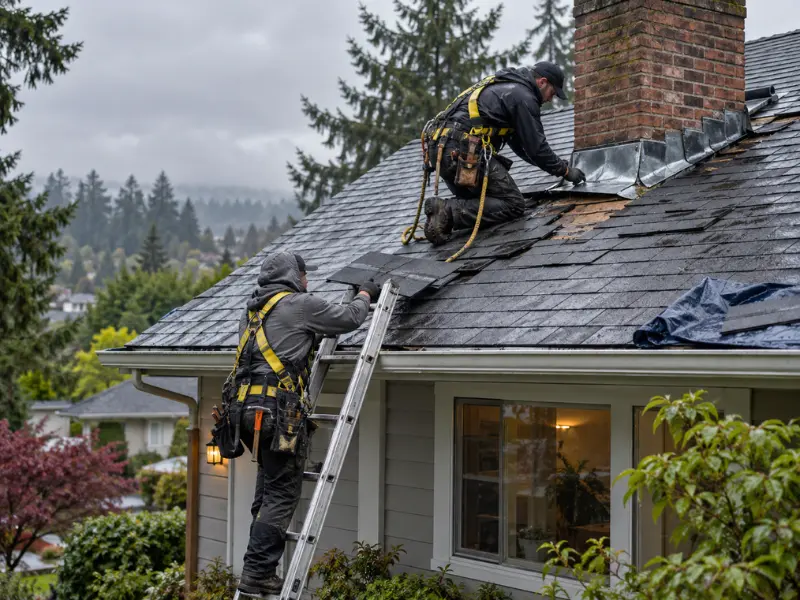
Call us or request a free estimate online, and we'll get a crew scheduled as soon as conditions are safe. Then you'll get a clear written estimate for the permanent repair.
Frequently asked questions
1. What do you do first when a roof starts leaking mid-storm?
Firstly, protect the inside by getting the water off and removing the electronics, furniture, etc. Secondly, you should take pictures to document water spots, spills, and drips. Finally, you call a roofer, but you shouldn't be on your roof if it's wet and windy.
2. How fast can a roofer get out in Puyallup?
In most instances, we are able to arrive to Puyallup on the same day as your service request, within our hours of 6 AM to 9 PM. Following a large windstorm, we receive an abundance of service calls, so we prioritize active leaks and open roofs first. The sooner you call, the higher your request will be on our list.
3. Will a tarp hold until proper repairs can happen?
Yes, properly installed tarps hold for several weeks which is usually enough time to permanent repair. However, strong winds and UV light will degrade tarps over time, so we check them again after severe weather and do not consider them a permanent solution.
4. Does homeowners insurance cover emergency roof work in Washington?
Many Washington homeowners insurance coverages will pay for sudden damage like wind or a fallen tree and necessary repairs to prevent additional damage, but won't cover gradual damage or repairs to a roof that leaks due to age. Make sure you know your deductible and coverage before you file a claim, as it can sometimes be cheaper to pay for minor repairs yourself.
5. Can roof work be done while it is still raining?
Temporary work such as tarping may be done in inclement weather if the roof is accessible and it is safe to work on. Permanent repair of a roof should not be done in wet weather, as sealants and underlayments will not adhere to wet weather. The roof should never be worked on in high winds or inclement weather such as lightning.
6. How much does emergency roof repair cost?
The cost will depend on the size of the damaged area, roof pitch, access and if a tarp is needed first. A tarp and patch job will be much cheaper than replacing decking or rafters. We can give you a written estimate before making any permanent repairs.
7. Is it safe to tarp my own roof?
Usually, but only when the roof is not precipitous, or slippery. Falls from the roof, causing severe injury, occur every year because the roof was slick with rain, or storm conditions were in the forecast. If work must be done, cover things from inside, and let a professional crew do work on the roof.
8. How long does a permanent repair take after the storm?
The overwhelming majority of storm repairs take a day once the roof is dry and materials are on hand. Jobs with major decking or rafter repairs can take a couple of days to complete. Insurance approvals can delay some jobs, so we recommend filing for your insurance claim as soon as possible.
Visit or Call Us
Roosevelt Roofing LLC
Phone: (253) 318-3543
Hours: Monday to Sunday, 6:00 AM to 9:00 PM
Family-owned and veteran-owned, based in Spanaway, WA
Serving Puyallup, Sumner, Graham, Spanaway, Fredrickson, Eatonville, Tacoma and the rest of Pierce, King and Thurston counties.
