

BLOGS
Where Does the Rinse Water Go After Roof Cleaning?
Somewhere specific, and in King County it depends on your address. Seattle runs three different collection systems, and in two of them water reaching the street arrives in a creek, a lake, or Puget Sound with no treatment at all. Worth knowing before someone sends treated runoff down your driveway.
By Eric Haugh, Owner · Last updated August 24, 2026
Three Systems, Three Destinations
Most roof cleaning advice says keep runoff out of the storm drain and stops there. In Seattle it's worth understanding why, because the city isn't plumbed one way.
Seattle Public Utilities operates three types of collection system. In combined sewer areas, stormwater and sewage travel in a single pipe to the King County interceptor and on to treatment — so runoff there generally reaches West Point or Renton, except when heavy rain triggers an overflow. In partially separated areas, street stormwater goes into one pipe discharging directly to a creek, lake, or marine water, while sewage and private-property downspouts go into another pipe bound for treatment. And in ditch and culvert areas, there are no storm pipes at all — water moves through ditches and culverts straight to the city's creeks, lakes, and Puget Sound.
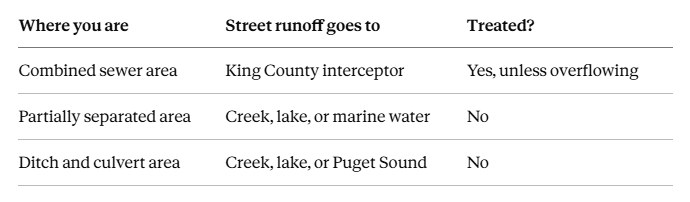
The detail worth pausing on: in partially separated areas your downspouts already run to the sewage side, so ordinary roof runoff is handled. It's water that reaches the street which isn't. That's the difference between a crew that diverts downspouts and contains rinse water, and one that lets it run down the drive.
Outside Seattle the same logic applies under each city's own code. Issaquah publishes pressure washing guidance noting that outdoor washing commonly discharges wastewater to the storm system unless the operator actively collects it, and Seattle's own stormwater code prohibits illicit discharges to public drainage systems.
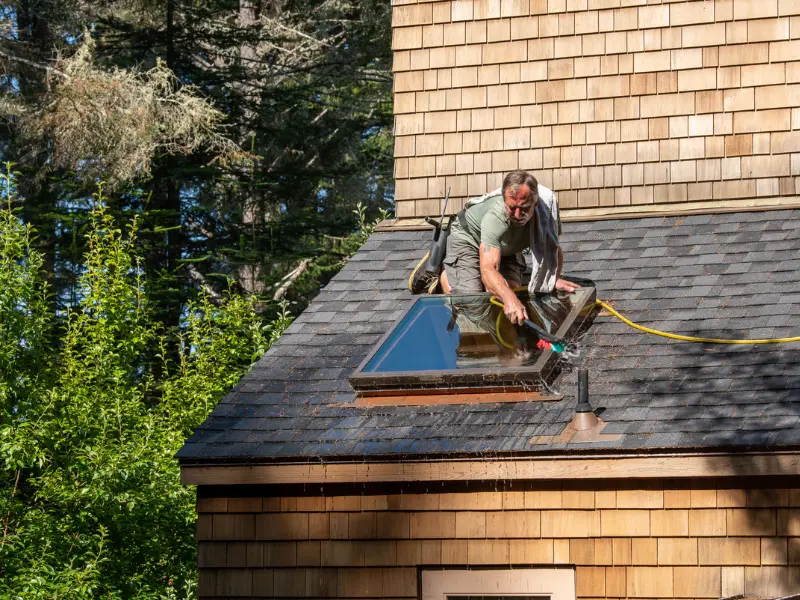
So the question to ask any roof cleaning services King County Washington homeowners are comparing: what happens to the rinse water? The right answer is short — divert or disconnect downspouts before treating, direct runoff onto lawn or gravel where soil can filter it rather than onto pavement draining to the street, and avoid zinc and copper compounds, which are toxic to aquatic life in a county whose waterways carry salmon.
Is Soft Washing Safe for My Shingles?
Safe, yes. The question is really about the alternative.
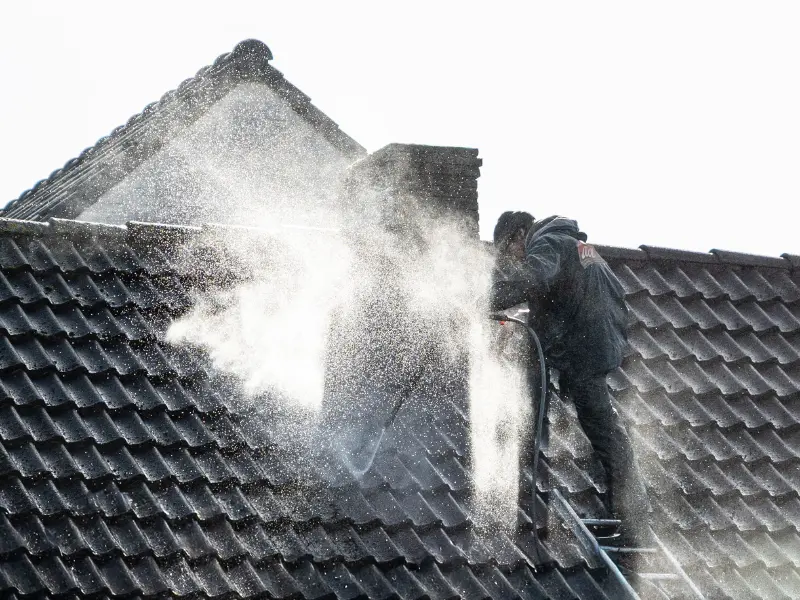
Granules are the shingle's sunscreen. Strip them and you haven't cleaned the roof, you've aged it — and most warranties treat high-pressure cleaning as grounds for refusal. Soft wash roof cleaning works chemically at garden-hose pressure instead, which is why it looks underwhelming on the day and keeps looking better for a month afterwards.
If a crew leaves your roof visibly transformed in an afternoon, ask what pressure they used. Our Pierce County guide sets the two methods side by side.
Does Moss Damage a Roof in the Pacific Northwest?
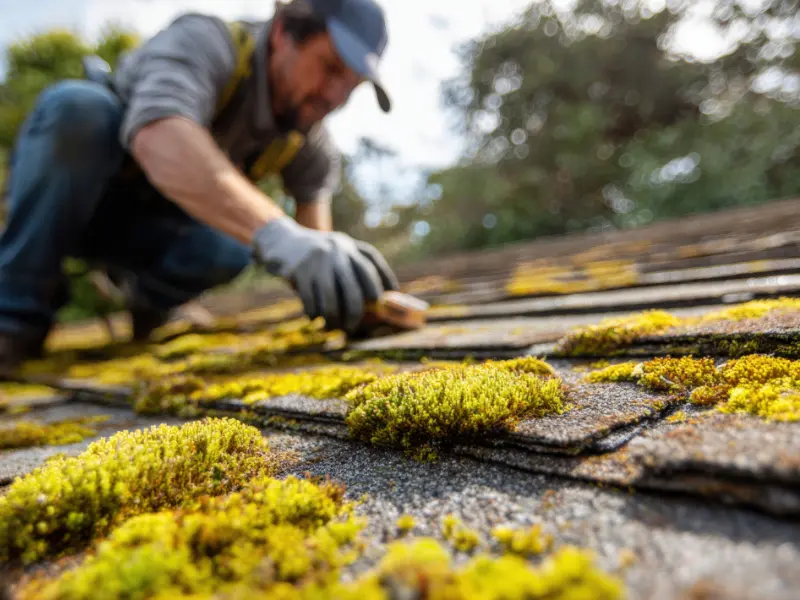
Does moss damage a roof in the Pacific Northwest? It does, though not by eating anything. It works as a wedge and a sponge — growing under the leading edge of a course, lifting it, and holding water against what's underneath long after the rain stops.
The part worth internalising is that heavy moss is usually evidence rather than cause. Granules go first; the rough absorbent surface left behind is what moss can finally grip. So a roof carrying thick growth has often already lost the layer that mattered, and scrubbing it clean can expose how little is left. That's when the useful answer is replacement rather than another treatment.
How Often, West to East
How often should a roof be cleaned in Washington has a genuinely different answer here than in the South Sound, and a different answer again across the county.
The King County lowlands sit in the Olympic rain shadow and receive materially less annual rainfall than Olympia does. So moss pressure in Seattle, Bellevue, and the Eastside suburbs is real but lighter than a Thurston homeowner deals with — and every three to five years is often sufficient on an open lot.
That changes moving east. Toward Issaquah, Sammamish, North Bend, and the foothills, rainfall rises, canopy gets denser, and the interval shortens to every two to three years. Bellevue and North Bend genuinely aren't on the same schedule, and a contractor quoting both identically hasn't looked at either.
Two other factors sit on top. Orientation — north and north-east slopes dry slowest and grow moss first, so treating only what needs it is cheaper and gentler. And canopy — mature conifers overhanging a roof outweigh geography entirely.
Practically: look at your north slopes each autumn. Green fuzz between courses is the moment to spot-treat. Thick cushions lifting edges means you waited. Debris compounds all of it, which is why roof and gutter work usually happen together — our gutter cleaning guide covers that side.
Do You Offer Moss Prevention Treatments?
We do, and it's worth being clear what you're buying. Nothing on the market prevents moss in this climate. A roof algae treatment buys time — it slows the return and shrinks the next job, and catching early discolouration is far cheaper than dealing with cushions two years later. An annual "prevention" plan is repeat cleaning with a friendlier name, which is a reasonable thing to buy as long as nobody pretends otherwise.
What genuinely changes the trajectory has nothing to do with chemicals. Sunlight does most of it, so overhanging limbs are the first thing to address. Clear valleys and gutters remove the damp debris moss establishes in. And zinc or copper strips do suppress growth, at the cost of releasing metals that are toxic to aquatic life — in a county draining to Lake Washington, the Cedar, the Sammamish and the Sound, that's a real trade rather than a theoretical one.
Cost, and Where We Work
How much does roof cleaning cost in King County? Pricing follows access more than area, and roof moss removal is quoted the same way. A single-storey ranch with a shallow pitch is quick; a steep two-storey with limited ladder placement is not, regardless of square footage. After that it's how many slopes genuinely need treating and how established the growth is — and treating one north elevation caught early is a fraction of a whole-roof job.
The saving worth asking about is scheduling: roof treatment and gutter clearing share the same staging, so one visit costs materially less than two.
We serve King County and Pierce County. The service sits on our roof and gutter cleaning page, the area list on our locations page, and finished jobs in the gallery. Where moss has already lifted courses or exposed underlayment, you're into roof repair.
If you've been searching Roof Cleaning Services in King County, WA, or roof cleaning services near me Seattle WA, three questions sort the field: what pressure, where does the rinse water go, and will you tell me if this roof isn't worth cleaning. The best roof contractor Bellevue WA residents recommend answers the third without being asked.
Frequently Asked Questions
1. How much does roof cleaning cost in King County, WA?
Access drives it more than roof size. A single-storey home with a shallow pitch is straightforward; a steep two-storey with awkward ladder placement takes longer whatever its footprint. Then it's how many elevations actually need work and how thick the growth is — one north slope caught at the fuzzy stage is a fraction of a whole-roof job on established cushions. The scheduling saving is real too: roof treatment and gutter clearing use the same staging, so booking them together costs meaningfully less than two visits.
2. How often should I clean my roof in the PNW?
There isn't one King County answer, which is the point. Seattle, Bellevue and the Eastside suburbs sit in the Olympic rain shadow and get noticeably less rain than the South Sound, so an open lot there can often go three to five years. Head east toward Issaquah, Sammamish and North Bend and both rainfall and tree cover climb, pulling the interval back to two or three. Slope orientation shifts it again, since north-facing pitches dry last, and mature conifers overhead override the geography entirely.
3. Does roof moss cause damage?
Yes, by wedging and by holding water. Growth works its way under the leading edge of a shingle course, lifts it, and keeps the deck beneath damp well after the weather clears — which lets wind-driven rain get behind the water-shedding plane. On cedar it drives rot directly. Equally important: thick moss is usually a sign the granule layer has already gone, since moss needs a rough absorbent surface to establish. Cleaning a roof in that condition can reveal there was little left to protect.
4. Is soft washing safe for my shingles?
Yes, and it's the only sensible method on asphalt. Granules act as the shingle's UV protection, and high-pressure washing removes them — you can watch it happening in the runoff. Most manufacturers treat that as grounds to decline a warranty claim. Soft washing does the work chemically at roughly garden-hose pressure, which is why the result looks modest immediately and continues improving for weeks as dead growth sheds. A dramatic same-day transformation is a warning sign, not a selling point.
5. Do you offer moss prevention treatments?
Yes, with the caveat that nothing genuinely prevents moss here — treatments slow its return and reduce the next job, which is worth paying for provided it's described accurately. An annual plan marketed as prevention is repeat cleaning under another name. The measures that actually shift the outcome aren't products: trimming limbs so sunlight reaches the roof, keeping valleys and gutters free of the damp debris moss colonises, and treating discolouration early. Zinc and copper strips work but release metals harmful to aquatic life.
Contact Roosevelt Roofing LLC
Roosevelt Roofing LLC Serving King County, WA and the Puget Sound region Phone: (253) 318-3543 Hours: Monday–Sunday, 6:00 AM – 9:00 PM Family-owned and veteran-owned, serving King County including Seattle, Bellevue, Issaquah, Sammamish, Renton, and North Bend, plus Pierce and Thurston County.
Moss on the north slope? Request a free estimate or call (253) 318-3543, and we'll soft wash it, keep the rinse water out of the drainage system, and tell you honestly whether the roof is worth cleaning.

QUICK LINKS
SERVICE AREAS
CONTACT INFORMATION
Eric Roosevelt @ Roosevelt Roofing LLC
CALL US
HOURS
Mon - Sun 6:00 am - 9:00 pm
Copyright 2026. Roosevelt Roofing LLc. All Rights Reserved.