

BLOGS
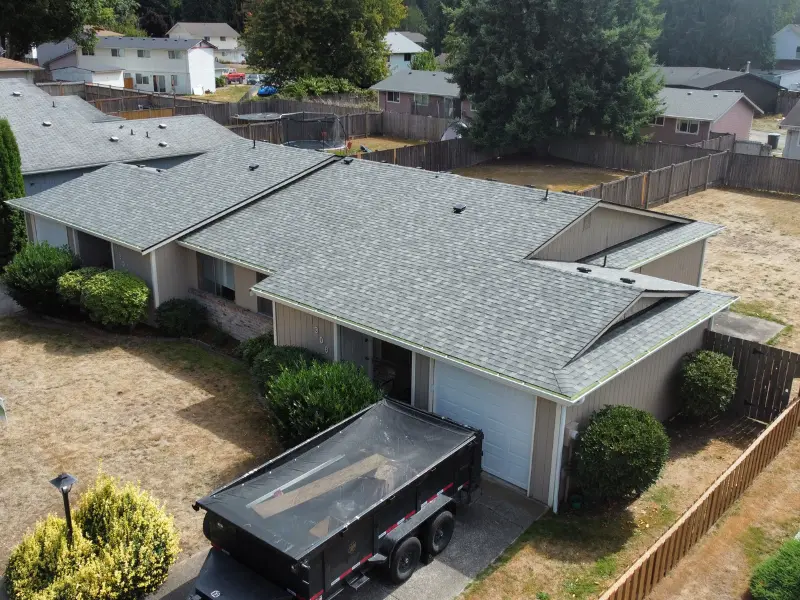
How Are Roof Installation Services Done in King County?
Roosevelt Roofing LLC provides residential roof installation services throughout King County, WA — new roofing system installations for new construction, garage and addition builds, and complete reroofing projects where a fresh roofing system goes on from the deck up. Understanding how a new roof installation works, layer by layer, is the fastest way to evaluate whether what you're being quoted actually constitutes a complete roofing system installation or a partial job that will underperform in King County's climate.
By Eric Roosevelt, Owner & Veteran · Last updated July 2026
What Is Included in Roof Installation Services?
A complete residential roof install service installs a layered roofing system — not just the shingles you see from the street. Each layer performs a specific function, and skipping or shortcutting any of them creates failure points that King County's 150+ annual rain days will find quickly. Here's the step-by-step roof installation process for a standard King County residential job:
Step 1 — Roof deck verification. The installation starts at the deck — typically OSB or plywood sheathing fastened to the roof framing. Before any new roofing system installation material goes on, we verify deck condition, nail pattern spacing, and structural integrity. Damaged or delaminated sections are replaced. This step is often skipped in rushed installs; it shouldn't be.
Step 2 — Drip edge. A continuous metal drip edge is installed along the eaves and rake edges before underlayment goes on at the eaves. Drip edge controls water runoff at the roof's perimeter, directing it away from the fascia board — a critical detail in a market where rain is effectively continuous from October through April.
Step 3 — Ice-and-water shield. Washington State building code requires ice-and-water shield at all eaves (minimum 24 inches from the interior wall line), at roof valleys, and at all penetrations. This self-adhering membrane is the last line of defense against water infiltration at the most vulnerable points of the roofing system. On King County homes, we also apply it at all low-slope transitions and dormers, because these are where water pools longest during sustained rain events.
Step 4 — Synthetic underlayment. A high-performance synthetic underlayment covers the main roof field over the deck, providing a secondary water barrier beneath the finish material. Premium synthetic underlayment significantly outperforms #15 or #30 felt in the PNW's moisture environment and resists tearing during installation.
Step 5 — Flashing installation. Counter flashings at chimneys, step flashings at dormers and wall-roof junctions, vent pipe boots at all penetrations, and valley liners — all installed before any field shingles go on. Flashing failure is the most common cause of roof leaks in King County. In a new roof installation, there's no excuse for cutting this step short.
Step 6 — Starter course and field shingles. A starter strip at the eave edge seals the underside of the first course of shingles before field installation proceeds up the slope. Shingles are installed in offset courses per manufacturer pattern — critical for maintaining the staggered joint pattern that prevents water infiltration.
Step 7 — Hip and ridge cap. Ridge cap shingles are installed at all ridges and hips, and a continuous ridge vent is integrated to ensure proper attic ventilation — required for both energy code compliance and manufacturer warranty validity on most shingle products installed in Washington State.
Step 8 — Final inspection and cleanup. Every nail, old shingle fragment, and wrapper is removed from the property. A magnetic sweep of the yard collects any dropped fasteners. We photograph the completed installation and document every stage for your records.
For homeowners comparing quotes: any scope omitting ice-and-water shield, skipping synthetic underlayment in favor of felt, or excluding ridge ventilation is not a complete installation — it's a shortcut that will surface as a leak within a few King County rain seasons.
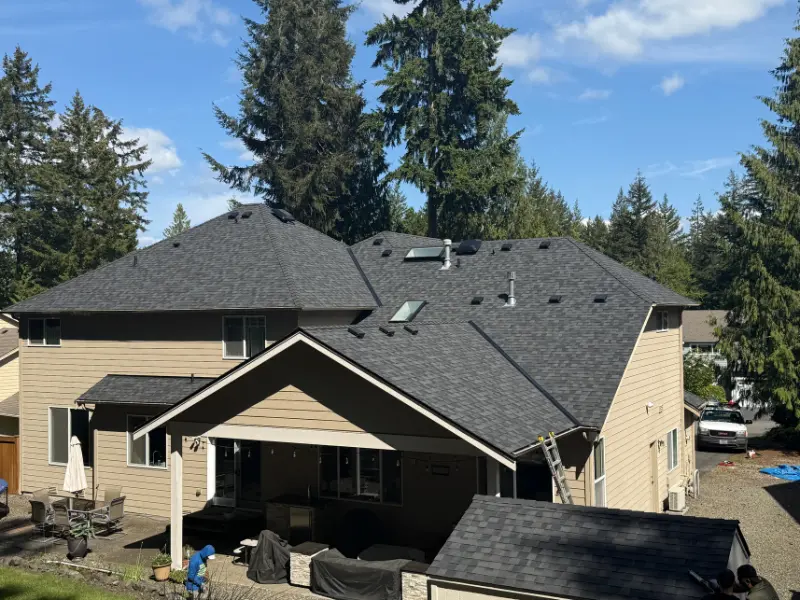
What Are the Best Roofing Materials for New Installation in 2026?
The best roofing materials for new installation in King County depend on your budget, roof geometry, and long-term ownership horizon. Here's how the main options compare for the Pacific Northwest's climate in 2026:
Architectural asphalt shingles are the standard choice for residential roof install service across King County — practical for most roof pitches, available in a full range of profiles and weights, and priced accessibly for most project budgets. For King County specifically, we recommend shingles with algae-resistant granules (look for "AR" in the product designation). PNW roofs accumulate moss and algae faster than roofs in drier climates — algae-resistant granules slow that cycle and extend shingle life. Class 4 impact-resistant shingles are worth considering for South King County properties, where hail events occur more regularly than homeowners typically expect.
Metal roofing — standing seam or metal shingles — is the best long-term material investment for King County new roof installations. Metal naturally resists moss and algae growth because it doesn't retain moisture the way composite shingles do. A properly installed metal roof lasts 40–70 years in the PNW climate and often outlasts the structure it's installed on. The upfront cost is meaningfully higher than asphalt, but the total ownership cost over 40 years is typically lower when you account for no re-roofing cycles and minimal maintenance.
Tile and slate suit steeper pitches and specific architectural styles. Both are heavy — older King County structures may require framing upgrades before installation. We assess structural capacity before recommending tile on any project.
TPO and EPDM are standard for flat and low-slope applications — commercial buildings, low-slope residential additions, and garage builds with minimal pitch. King County's rainfall environment demands proper drainage slope (minimum 1/4 inch per foot). TPO is the preferred commercial flat material in 2026 for its weld-seam durability and reflectivity.
For most King County residential new roof installations, architectural asphalt with AR granules is the practical starting point. For homeowners planning long-term ownership, metal is our consistent recommendation.
How Much Does Roof Installation Cost in King County?
New roof installation cost in King County follows the same core variables as any roofing project: square footage, pitch complexity, material selection, and extent of supplemental work (structural repair, additional flashing, ventilation upgrades). For a new construction installation where the deck is clean and ready, the cost calculation is more straightforward than a replacement scenario where unknown deck conditions drive scope changes mid-project.
Roosevelt Roofing LLC provides free estimates for all King County roof installation projects. Call or text (253) 318-3543 for a firm breakdown including permit fees. Our King County roof replacement services guide covers cost variables in detail if you want to understand the numbers before calling.
Do You Need a Permit for Roof Installation in King County?
Yes — roof installation in King County requires a permit, and the specifics depend on your address and project type.
New construction: Roofing is typically covered under the general building permit for the structure and inspected as part of the construction inspection sequence.
Re-roof (complete replacement on an existing structure): King County and its incorporated cities require a separate roofing permit. For properties in unincorporated King County, the permit goes through the King County Department of Local Services, Permitting Division. For properties within incorporated cities — Renton, Auburn, Kent, Burien — the permit process runs through that city's building department. We know which office covers your address and handle the application on every job.
Washington State Energy Code compliance: New roof installations in King County are subject to the Washington State Energy Code (2021 WSEC), which requires adequate attic insulation (R-49 in climate zone 4C), proper vapor retarder placement, and minimum ventilation ratios. These aren't optional — they're code-enforced and inspected. Our installs meet these requirements as standard practice.
Which King County Communities Does Roosevelt Roofing Serve?
Roosevelt Roofing LLC provides new roof installation services across King County, with our core service area in South King County:
Auburn — fast-growing residential corridor; new construction and complete reroofing projects on homes approaching first replacement age
Renton — mix of new construction and established neighborhoods; architectural and metal roofing common on newer builds
Kent — significant residential inventory from the 1980s–1990s; many entering first or second roofing cycle
Burien and SeaTac — older housing stock with complex rooflines; full system installations require careful attention to flashing at multiple penetration points
Maple Valley and Covington — suburban and rural properties with larger footprints; often include garage, shop, or detached structure roofing alongside the main house installation
Enumclaw and Black Diamond — foothills communities with higher snowfall; snow load considerations affect material selection and fastening patterns on new installations
We also serve Pierce County and Thurston County. For our full roof replacement service, roof repairs, and roof and gutter cleaning, those service pages cover the full scope. If you're comparing installation versus replacement scope, our King County roof replacement services guide explains the tear-off and replacement side of the process in parallel detail.
Frequently Asked Questions
1. What is included in roof installation services?
A complete roofing system installation includes: deck verification and repair, drip edge, ice-and-water shield at eaves and valleys (required by Washington State code), synthetic underlayment across the main field, all flashing at penetrations and junctions, starter course, field shingles, ridge cap and ridge ventilation, and site cleanup. Any quote that omits ice-and-water shield or ridge ventilation is not a complete installation per current Washington State building code requirements.
2. How much does new roof installation cost in King County?
Cost depends on roof square footage, pitch, material selection, and the extent of supplemental structural or ventilation work. Roosevelt Roofing LLC provides free, itemized estimates for all King County projects — call (253) 318-3543. We include permit fees in the estimate and provide a firm total before scheduling.
3. How long does a new roof installation take?
Most residential new roof installations in King County take one to two days for the active installation phase. The total project timeline from estimate to completion runs two to three weeks including permit processing. Larger homes, complex roof geometries, or projects requiring structural work before installation begins will take longer. We provide a specific timeline at the estimate stage.
4. What is the best roofing material for new construction in Washington?
For most King County residential projects: architectural asphalt shingles with algae-resistant granules are the practical choice for cost and performance. For homeowners planning long-term ownership, metal roofing — standing seam or metal shingles — is our consistent recommendation. Metal resists moss and algae naturally, lasts 40–70 years in the PNW climate, and requires significantly less maintenance than asphalt over a full ownership horizon. Class 4 impact-resistant shingles are worth considering in South King County where hail is a seasonal risk.
5. Do I need a permit for new roof installation in King County?
Yes. New construction roofing is permitted under the building permit for the structure. Reroofing (replacement on an existing building) requires a separate roofing permit through King County or the relevant city building department (Renton, Auburn, Kent, Burien, etc.). Washington State Energy Code compliance — including R-49 attic insulation, vapor retarder placement, and ventilation ratios — is inspected as part of the permit process. Roosevelt Roofing LLC handles the permit application on every project.
Contact Roosevelt Roofing LLC to schedule a free roof installation estimate anywhere in King County or across Pierce and Thurston County, WA.
Call or Reach Us
Roosevelt Roofing LLC Phone: (253) 318-3543 Hours: Monday–Sunday, 6:00 AM–9:00 PM
Serving King County including Auburn, Renton, Kent, Burien, Maple Valley, Enumclaw, and Black Diamond. Also serving Pierce County and Thurston County, WA.

QUICK LINKS
SERVICE AREAS
CONTACT INFORMATION
Eric Roosevelt @ Roosevelt Roofing LLC
CALL US
HOURS
Mon - Sun 6:00 am - 9:00 pm
Copyright 2026. Roosevelt Roofing LLc. All Rights Reserved.